How does pain travel through our body?
Pain emerges from a two-stage journey. Stage one: a 3-neuron, 2-synapse pathway — much like riding a local train, then a high-speed train, then a city metro — carries the raw signal from the body's tissues to the brain cortex. This signal carries two pieces of information: intensity and location. Stage two: the arrival at the stadium, where the signal meets thoughts (prefrontal cortex), emotions (limbic system), memories (hippocampus), and behaviors (motor cortex). This transformation turns nociception into conscious pain — an experience that is unique to each person.
1 — A reminder: our nervous system
There are two nervous systems in our body:
- The voluntary system — the one we are conscious of
- The autonomic system — the one that operates beyond our will (heartbeat, digestion, pupil size…)
The voluntary system itself comprises two parts:
- A motor system: which allows us to move and to react to stimuli (stepping into the shade when it's too hot, for example)
- A sensory system: which allows us to perceive our environment in order to adapt to it
Sensory information can be neutral, pleasant (a caress, a massage), or unpleasant — and it is in this last category that we find pain, which is therefore only one part of our sensations.
2 — 🚆 The big-game metaphor
Imagine two regions, each with its own sports team. These two teams have to face each other in a championship final at The Big Stadium. Fans from both regions are going to travel by public transportation.
They leave home and take a local train to the nearest regional station. There, they board a high-speed train toward the capital city — arriving at two different main terminals, depending on which team they support. Then they take the city metro to The Big Stadium where the final will be played.
Once they have arrived, the two groups of fans are seated in a specific area of the stadium, eager for the game to begin.
The game starts and the fans vibrate with each phase of play — they laugh, they cry, they jump up and down… At the end, the winning team erupts with joy, while the losing team shows its sorrow, even its pain.
3 — 🔍 The decoding
Here we have many analogies with pain.
3.1 — The journey: how the signal travels
The journey toward The Big Stadium — 3 trains and 2 major stations — is remarkably similar to the journey of the pain signal toward the brain.
| 🚆 In the metaphor | 🧠 In the body |
|---|---|
| Local train | 1st neuron, from the tissue to the spinal cord (SC) |
| Regional station | 1st synapse, in the dorsal horn of the spinal cord |
| High-speed train | 2nd neuron, from the SC to the thalamus (the brain's major relay) |
| The two main terminals | 2nd synapse, at the thalamus |
| City metro | 3rd neuron, toward the sensory cortex |
| Fans seated by region of origin | Nerve fibers classified by body origin (head, hands, feet…) |
| Number of fans | Intensity of the signal |
| Section of the stadium | Location of the pain |
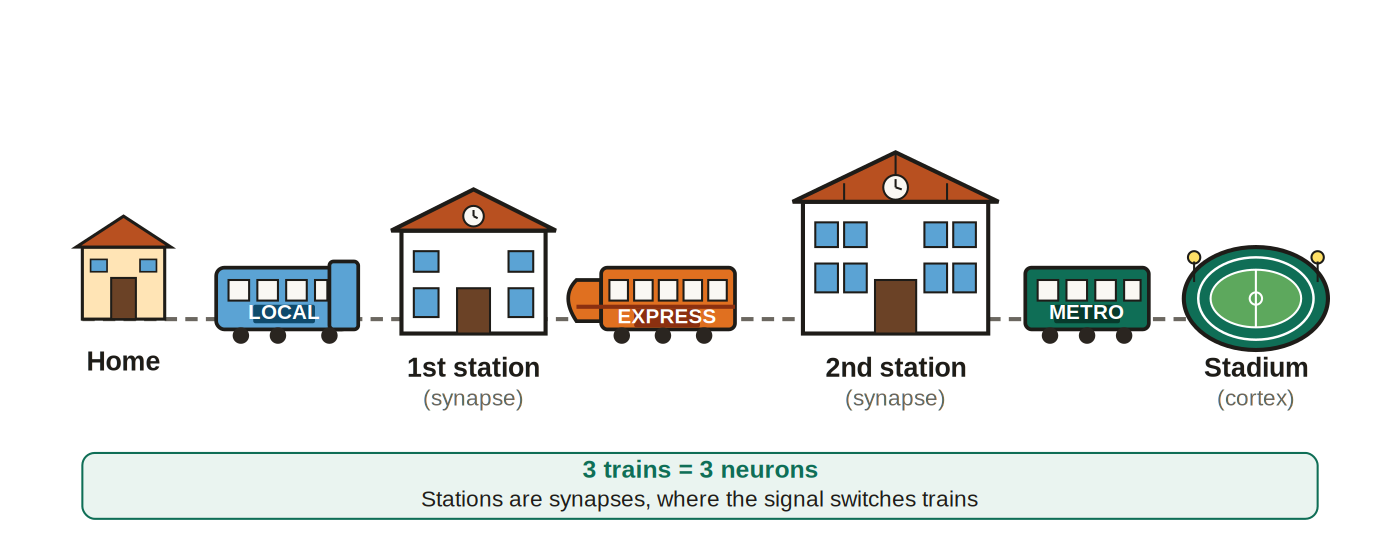
At this point, we have a signal we call NOCICEPTION. But the game has not yet begun.
3.2 — The game: how the signal is encoded
The game starts, and this is where the nociceptive signal transforms into pain — through the entry of thoughts, emotions, and behaviors into the picture.
| ⚽ In the metaphor | 🧠 In the body |
|---|---|
| Fans laugh, cry | Limbic system generates emotions |
| They recall past games | Hippocampus activates memories |
| They analyze the game phases | Prefrontal cortex builds thoughts |
| They raise arms, shout, jump | Motor cortex triggers behaviors |
| The loser (sorrow, defeat) | The pain patient |
| The game transforms everything | Nociception becomes PAIN |
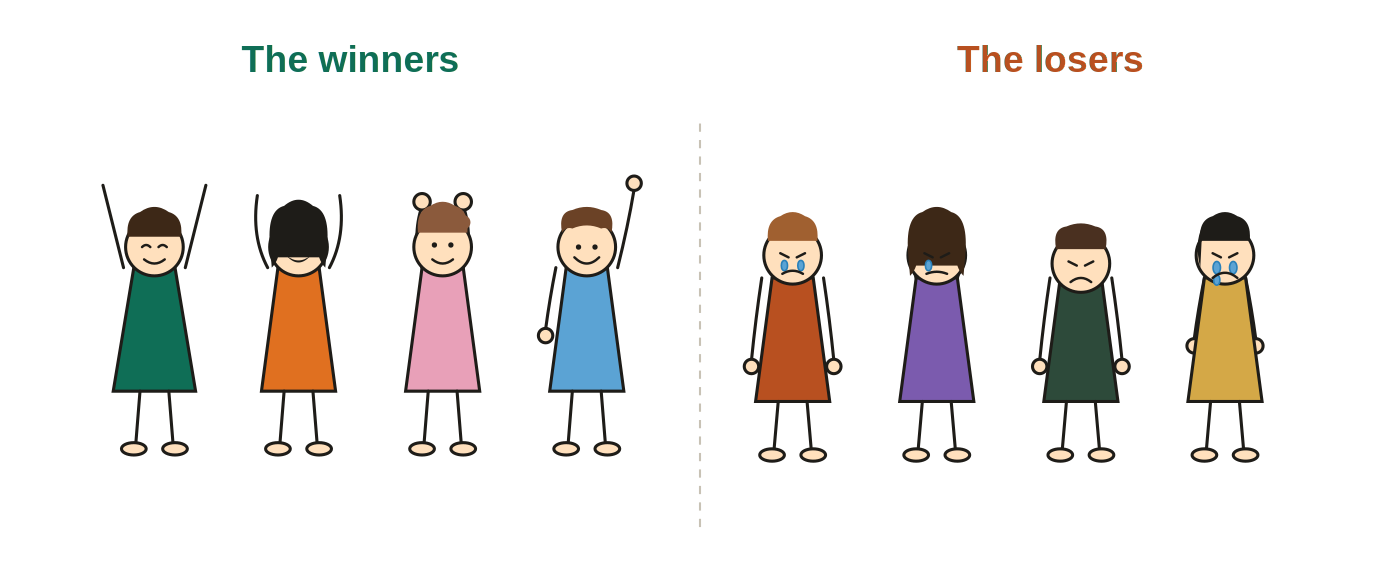
Pain is thus the conscious, subjective experience that is unique to each person.